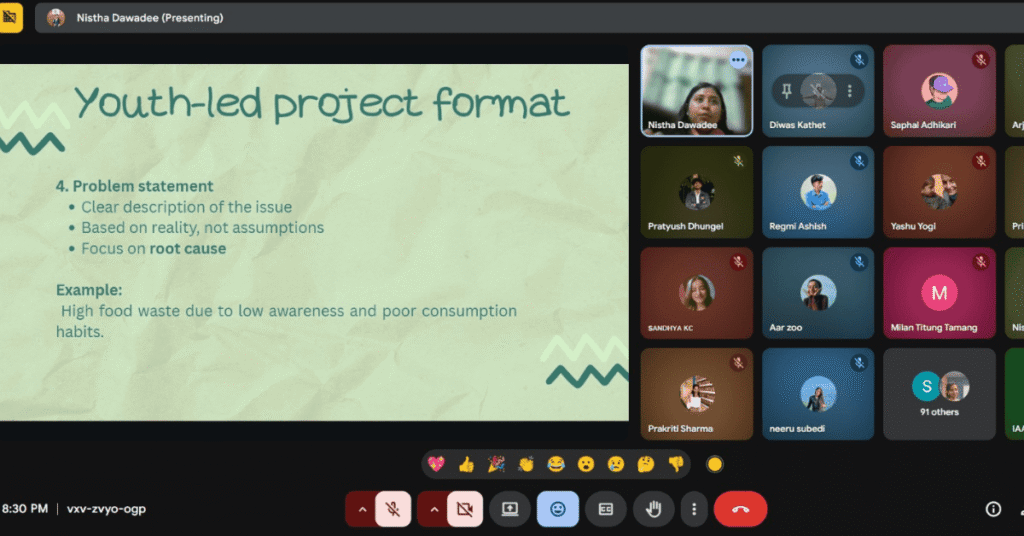
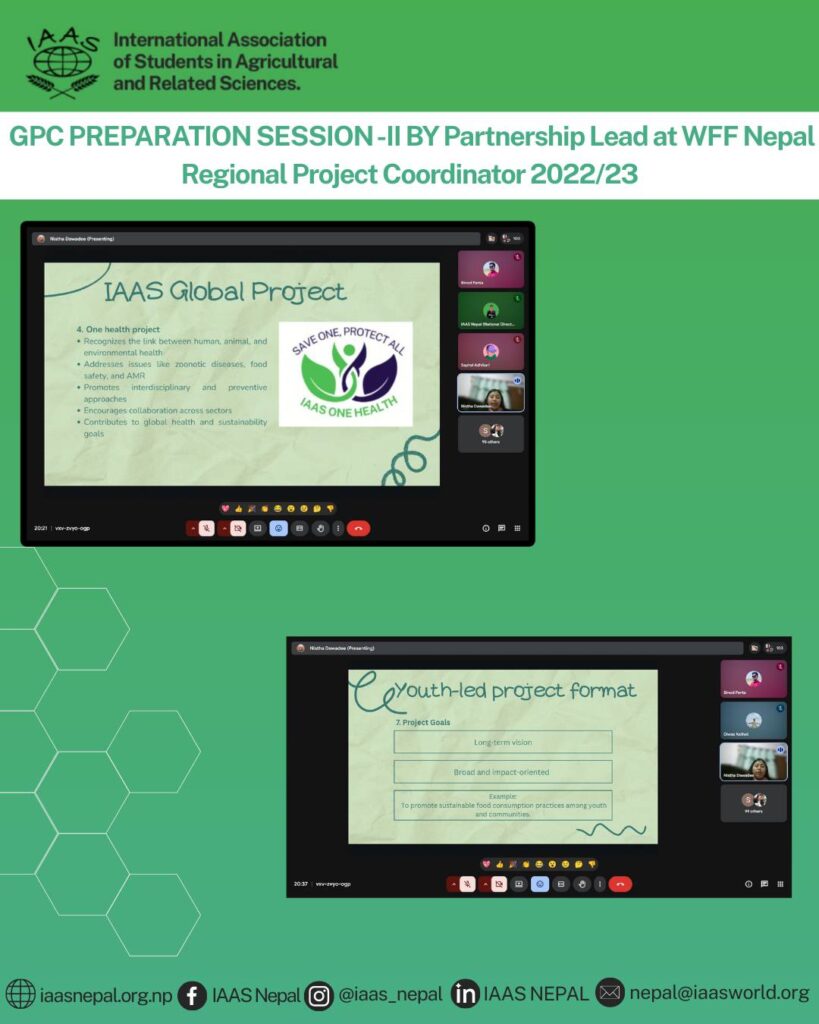
IAAS Nepal recently organized GPC Preparation Session II, an engaging online learning space designed to support members in their journey toward the Global Project Competition (GPC). On 18 December 2025, IAASers from different faculties and regions gathered virtually at 08:00 PM to explore how to turn promising ideas into impactful, well-structured projects. Guided by experienced resource person Nistha Dawadi, the session focused on practical aspects of planning, coordination, and execution that young project leaders often struggle with in their early attempts.
With the agricultural landscape changing rapidly, the need for innovative, student-led solutions has never been greater. IAAS Nepal recognizes that while our members have no shortage of brilliant ideas, the bridge between a “good idea” and a “successful global project” is built on technical knowledge, strategic planning, and impactful presentation.
Table of Contents
A Masterclass with Nistha Dawadi
The highlight of the session was our esteemed resource person, Nistha Dawadi. Bringing a wealth of experience as the former Regional Project Coordinator (2022/23) and the current Partnership Lead at WFF Nepal, Nistha provided the kind of insider perspective that you can’t find in a textbook.
Her presentation moved beyond the basics, diving deep into what the GPC judges are actually looking for. She emphasized that a winning project isn’t just about the “what,” but very much about the “how” and the “who.”
Key learning areas covered
The session was carefully structured to help participants move beyond abstract ideas and understand what makes a project competitive at the GPC level. Several important themes were highlighted:
- Project planning: Participants were guided through the core components of a solid project plan, including defining objectives, identifying target groups, and aligning activities with realistic timelines. Emphasis was placed on starting with a clear problem statement and designing solutions that are practical within the available resources.
- Proposal refinement: The resource person spoke about common weaknesses in student proposals, such as vague outcomes, lack of measurable indicators, and unclear budgeting. By discussing these points, the session encouraged participants to refine their drafts, strengthen their justifications, and communicate their concepts more convincingly.
- Partnerships and collaboration: One important segment focused on the value of collaboration across sectors and institutions. The session highlighted how strategic partnerships can expand reach, improve implementation, and open doors for funding or technical support, especially in areas like sustainable agriculture, food systems, and community development.
- Impact-driven implementation: Beyond winning a competition, the session reminded participants that projects should create lasting positive change. This included discussion on monitoring, evaluation, and long-term impact, helping IAASers think about how their interventions will benefit communities even after the project period ends.
Interactive engagement and Q&A
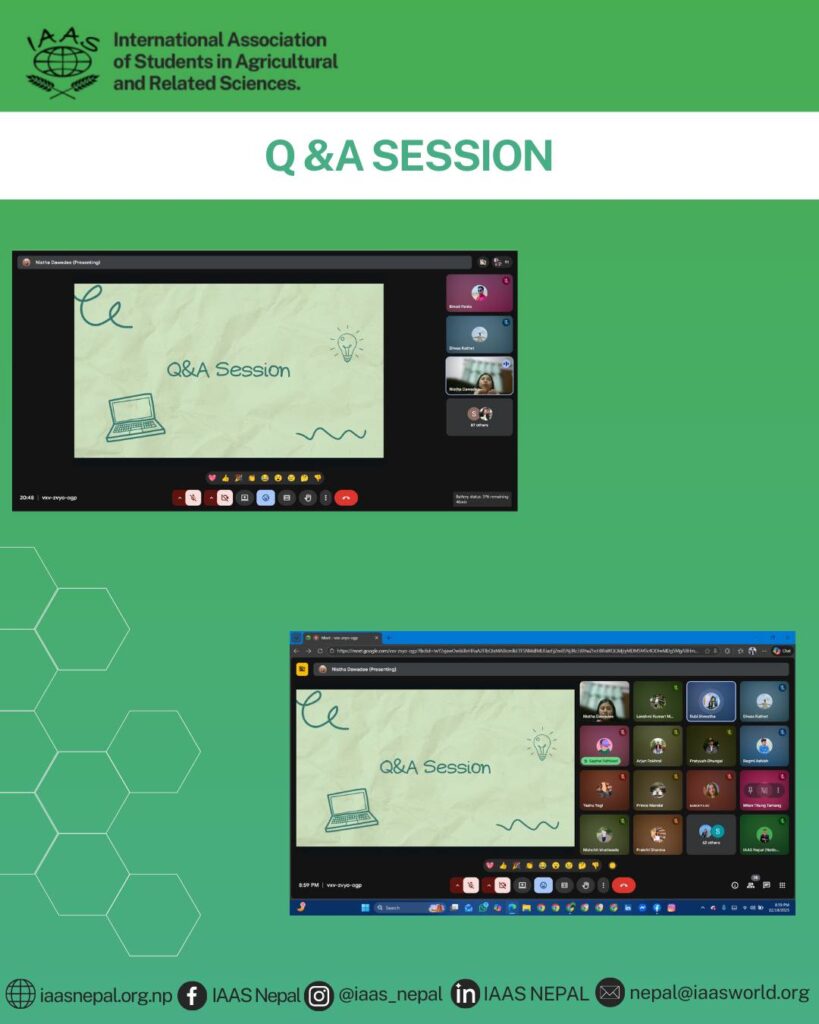
Far from being a one-way lecture, GPC Preparation Session II maintained a conversational and interactive tone throughout. Participants actively raised questions on topics such as selecting a suitable theme, managing a multi-member project team, and balancing academic commitments with project responsibilities. These queries opened space for detailed clarifications and practical suggestions that many attendees found directly applicable to their ongoing ideas.
During the Q&A segment, Nistha Dawadi shared personal experiences from her time as Regional Project Coordinator, explaining how early planning, clear communication, and flexible problem-solving can help teams navigate real-world challenges. She also reminded participants that every project, no matter how small, holds potential to contribute to broader goals like climate resilience, food security, and youth empowerment when approached with dedication and strategic thinking.
Why the GPC Matters
The Global Project Competition is more than just a contest; it is a springboard for future leaders in agriculture. For IAAS Nepal members, participating in the GPC means:
- Global Exposure: Testing your ideas against the best in the world.
- Skill Development: Gaining hands-on experience in project management, budgeting, and international communication.
- Real-World Impact: IAAS projects have a history of making tangible differences in local communities, from improving soil health to empowering rural women.
Outcomes and way forward
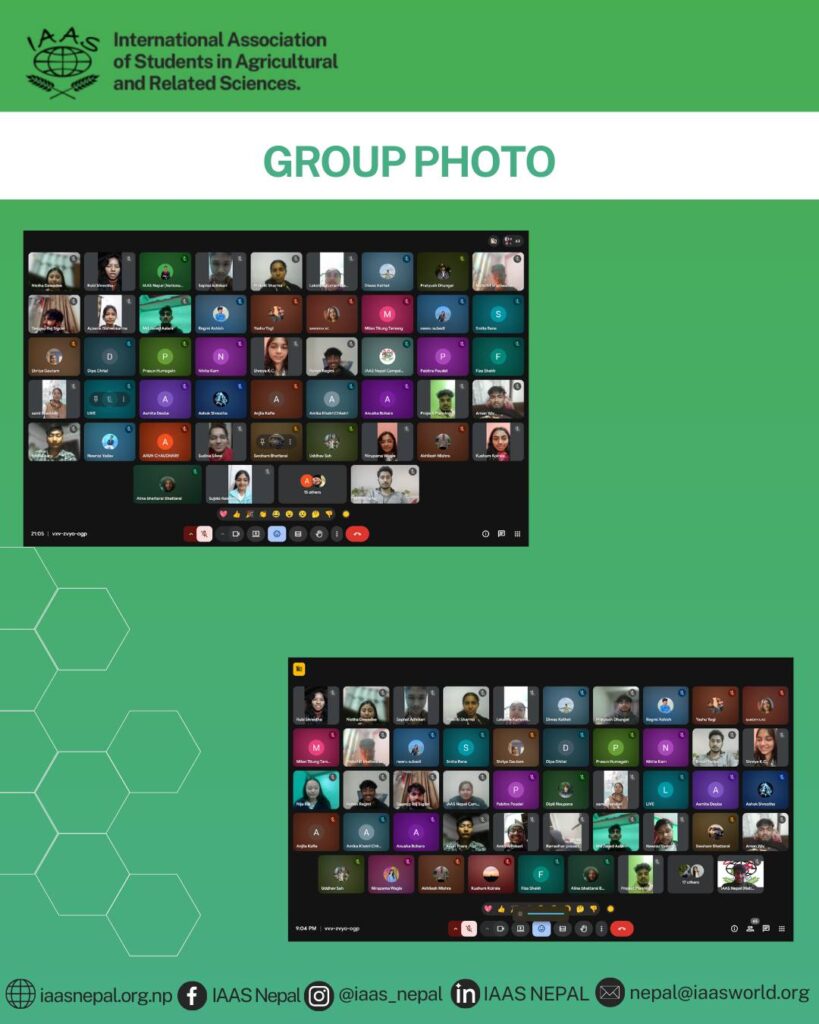
According to the press release, IAAS Nepal reported that GPC Preparation Session II concluded successfully with active and enthusiastic participation from members. The session provided a structured platform for collaboration, dialogue, and learning, enabling participants to better understand their roles and responsibilities within project teams. Members were encouraged to share opinions, identify key action points, and connect their ideas to the larger objectives of IAAS and the Global Project Competition.
Important decisions and follow-up steps emerged from the discussions, which will support future planning and implementation of projects under IAAS Nepal. The session not only helped refine individual proposals but also strengthened coordination, mutual understanding, and commitment among participants. Overall, GPC Preparation Session II proved to be a productive and well-organized initiative that moves IAAS Nepal one step closer to fostering confident, capable young leaders who can design and execute impactful projects in agriculture and related sciences.
Stay Connected with IAAS Nepal
Don’t miss out on future sessions and updates as we move closer to the competition deadlines. Follow us on our official channels to stay in the loop:
- Website: iaasnepal.org.np
- Facebook: IAAS Nepal
- Instagram: @iaas_nepal
- LinkedIn: IAAS NEPAL
- Email: nepal@iaasworld.org
Follow IAAS NEPAL for more news updates.
Visit our IAAS Nepal offical website.
Last updated on December 21, 2025 at 3:12 pm